In Feng Shui, "Tian Zhan Sha" is a commonly mentioned concept that refers to the narrow gap between two high-rise buildings, which is believed to bring negative effects. However, not all similar scenes meet the definition of Tian Zhan Sha. This article will explore in depth which situations are actually not considered Tian Zhan Sha, helping readers understand and identify it correctly.
Difference Between "One Line Sky" and "Tian Zhan Sha"
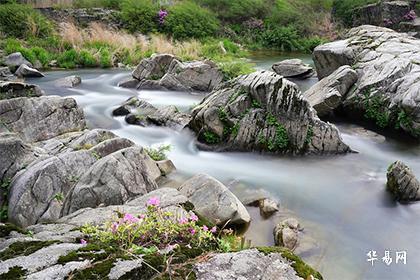
"One Line Sky" refers to a narrow gap between two cliffs, where the sky appears like a thin line, and it is commonly found in many famous scenic spots in China, such as Mount Huang in Anhui, Mount Emei in Sichuan, and Sanqingshan in Jiangxi. This natural landscape has an essential difference from "Tian Zhan Sha" in Feng Shui. "Tian Zhan Sha" specifically refers to the narrow gap formed between two high-rise buildings, while "One Line Sky" is a natural landform caused by tectonic movements creating mountain faults. The two differ significantly in their causes and impacts.
Similarities and Differences Between Ancient and Modern "Tian Zhan Sha"
In ancient times, "Tian Zhan Sha" referred to the valley between two mountain peaks, a natural landform formed by nature. In modern cities, "Tian Zhan Sha" refers to the narrow gap between man-made high-rise buildings. Although the appearance of "Tian Zhan Sha" differs between ancient and modern times, they share the common characteristic of possibly having adverse effects on the surrounding environment and residents. In ancient times, it was not advisable to build villages or cities in areas with "Tian Zhan Sha," as they were often accompanied by natural disasters such as landslides and mudflows. In modern times, "Tian Zhan Sha" may disturb the stability of the earth's energy due to the depth of the foundation and air flow force.
How to Identify "Tian Zhan Sha"
In real life, we can judge whether there is "Tian Zhan Sha" by observing outside our home's door, balcony, or window. If a narrow gap formed between two high-rise buildings appears in your view, similar to the situation shown in the figure below, then it belongs to "Tian Zhan Sha." Conversely, if the gap is spacious or does not create a sense of pressure, then this situation does not belong to "Tian Zhan Sha."
Examples That Are Not "Tian Zhan Sha"
To better understand which situations are not considered "Tian Zhan Sha," we can observe some examples that do not fall under this category. In these examples, the gaps between high-rise buildings are relatively wide, or the shape and position of the gaps do not create a sense of pressure, so they do not form "Tian Zhan Sha." By comparing these examples, we can more accurately identify and avoid the impact of "Tian Zhan Sha."

Through an in-depth analysis of "Tian Zhan Sha," we have learned that not all scenes resembling "One Line Sky" are considered "Tian Zhan Sha." Although ancient and modern "Tian Zhan Sha" differ in appearance, they may both have adverse effects on the environment and residents. Correctly identifying "Tian Zhan Sha" and avoiding its negative influence is crucial for maintaining good Feng Shui in residential areas. Through the introduction in this article, readers can more clearly distinguish "Tian Zhan Sha" from other similar phenomena and make wiser judgments and choices in real life.